A beautiful frame is not yet a story: a conversation with Azamat Dulatov
Why an expensive camera cannot replace a vision, how darkness works in Qash, and when a carefully planned shot should change for an actor.
In conversation with Almaty Indie Film Festival, cinematographer Azamat Dulatov explains how a film’s visual language takes shape — from the first reading of the script to working with light, movement and people on set. We discuss Qash (Қаш), Ona (Она) and Shakal (Шакал), the crew’s unseen labour, and a culture of preparation that even the most expensive equipment cannot replace.
Seeing the story
How did you become a cinematographer?
It probably began with an interest in images. As a child, I loved drawing and observing the world around me — people, light. I was always fascinated by how the same place could look completely different depending on the time of day, the weather or the lighting.
I began taking drawing more seriously while I was still at school. Later, I enrolled in the cinematography department at the Zhurgenov Academy of Arts.
At first, of course, I was drawn more to the visual side of cinema itself. Beautiful shots, unusual angles, camera movement, light. I wanted to experiment and try something new.
But over time I began to understand that cinematography is more than creating a beautiful image. It is a way of telling a story without words.
Sometimes a single look, a camera movement or the right light can say far more than an entire conversation.
What comes to you when you first read a script — and how does a film’s visual language emerge?
When I first read a script, I try not to think about equipment at all. I need to feel the story first. To understand the characters, their inner lives, and the atmosphere of the world they inhabit.
Usually, certain feelings and images come first. Sometimes it is a particular light; sometimes a colour, a space or a movement.
But I try not to commit to specific shots straight away. Because a film’s visual language should grow out of the story, not the other way round.
Then the director and I start discussing everything. What kind of world is this? How should the audience perceive it? What is the character feeling? How does that change throughout the film?
In some moments, the camera needs to be still, almost unnoticed. In others, it needs to move with the character, breathe with them, stay as close as possible.
I like a film to have a visual character of its own. For light, composition, colour and camera movement to work together in service of one story, rather than exist separately.
How can a cinematographic choice help the audience feel what is happening?
I think the most interesting thing in cinematography happens when the audience never thinks about how a scene was shot.
For example, in Ona we moved the camera on tracks, but tried to make the movement so smooth and unobtrusive that everything felt natural to the viewer. Even some fellow cinematographers did not immediately notice that the camera was moving.
Another example is a scene with a boy on a bicycle that we shot for one project. We mounted the camera on a bicycle and moved alongside him.
The boy seemed to stay in one place while the whole world rushed past him.
Technically, it is an interesting device, but the feeling matters more to me. It is as though we stop watching the boy from the outside and start experiencing the movement with him.
Light, darkness and the person in the frame
How does light change the feel of a scene? And what do you deliberately leave in darkness?
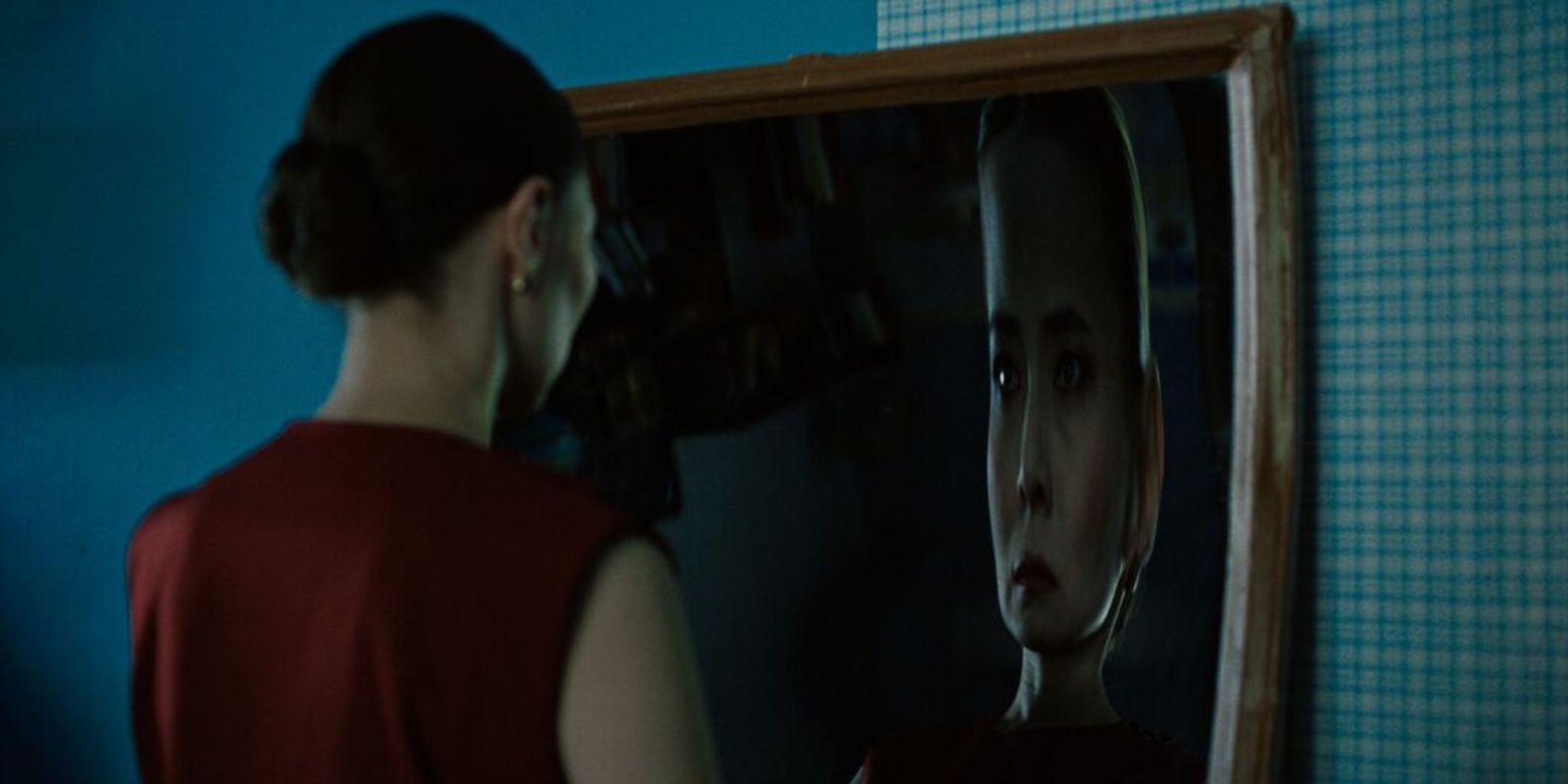
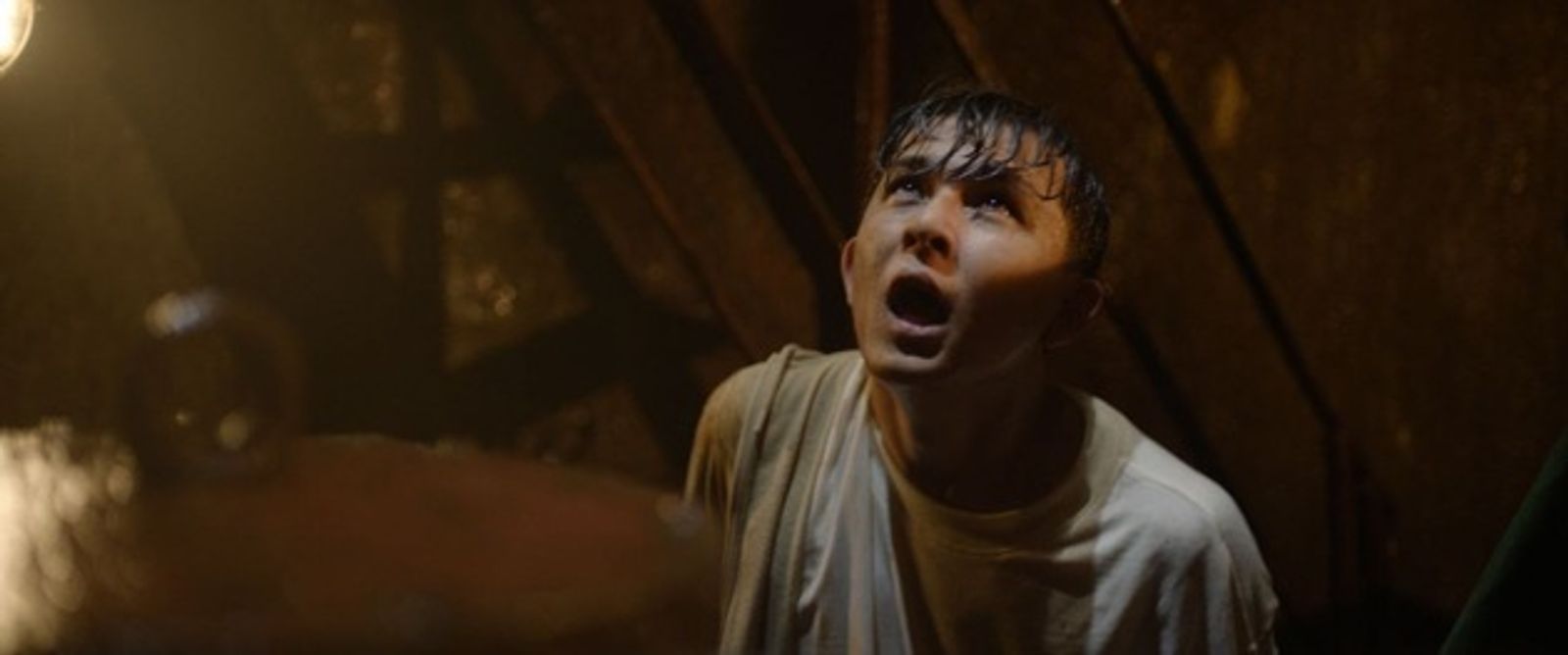
In Qash, for example, we have scenes in a yurt and in a cave. Fire was the main light source in both. It might seem to be the same warm firelight, but it works completely differently in those two spaces. The drama, circumstances and the characters’ inner states are different.
The steppe is vast, boundless; there is so much space around you. But I deliberately tried not to light all of it. If there was a fire in a scene, it became the main, sometimes almost the only, source of light. Everything else fell into darkness.
There was a particular philosophy behind that for me. Fire is light, and light is knowledge, life, hope.
Imagine an immense, endless steppe, absolute darkness all around, and a tiny source of light in the middle. Through that image, I wanted to convey how little of that light there is in the world around us, and how much it matters to a person.
When the characters walk across the steppe at night and the moon is present in the scene, we use an entirely different quality of light. Cold, harsh moonlight. There is no warmth from the fire, no sense of protection. A person is left alone with that immense space.
I tried not to mix those two sources unless the drama called for it. If there was a fire in the frame, I did not add strong moonlight as well. If the moon became the main source, we removed the fire. I did not want them to compete; each scene needed its own clear lighting character.
I do not think you always need to show the audience everything. Sometimes what remains outside the frame has a much stronger effect.
I like it when viewers do more than look at an image — when they begin to complete it in their minds.
Sometimes it is enough to show part of a face, a silhouette, or someone’s reaction to something off screen.
I think that is one of cinema’s great strengths. The viewer’s imagination can sometimes create a far more powerful image than anything we can show directly.
What do you do when a carefully prepared shot gets in an actor’s way?
For me, the actor and what they are feeling always matter more than a perfectly constructed shot.
You can spend hours preparing a complicated camera move, the lighting, the composition. But if the actor is uncomfortable, if they are constantly thinking about technical restrictions, that can kill the scene’s naturalness.
So I try to build the cinematography around what is happening, rather than force what is happening to fit the camera.
Of course, there are complex scenes in which everything has to be precisely calculated. Camera movement, actors, light, focus — everything must work in sync. But even then, it is important to give the actor room to live in the scene.
Sometimes that means changing the light, moving the camera or abandoning the original idea.
A good shot should not get in the way of a good performance.
A good shot should not get in the way of a good performance.
The people behind the frame
How does a crew bring a complex shot to life — especially when time and equipment are limited?
I believe that cinema cannot be made alone.
The director of photography is responsible for the visual approach, but a huge team brings it to life.
The gaffer, lighting technicians, focus puller, camera technician, grip crew — each has a crucial job.
Sometimes the audience sees only a few seconds of footage, but behind those seconds are hours of preparation and the work of dozens of specialists.
On Shakal, for example, we needed a complex, continuous camera move down from the second floor. We used a small goods lift to do it.
On screen, the audience sees a camera movement that should feel like part of the action. Behind it, though, is extensive technical preparation and close coordination between the camera and technical crews.
I really value people who do more than carry out a task — who think alongside you and suggest solutions.
Ultimately, a good shot is always the result of working together.
Time is probably the most common constraint. There is almost never enough of it.
Sometimes you have a complex scene and a good idea, but cannot use all the equipment you would like. You have to find other solutions.
Sometimes constraints make you think in more interesting ways. You stop relying on equipment alone and start looking for simpler but more precise ways to tell the story.
At the same time, I believe constraints should never become an excuse for poor preparation.
Pre-production is vital in cinema. The more thoroughly we think things through before filming, the more freedom we have on set.
You share the filmmaking process on social media. What remains invisible behind a finished shot?
I want to show that cinematography is more than someone with a camera choosing a beautiful angle.
Sometimes I post footage from a set where something incredibly complicated is happening. Large structures, dozens of people, lights, cameras, movement, equipment.
Then I show the finished shot. In the film, it looks like an ordinary morning, an ordinary street or a completely natural situation.
We might spend an enormous amount of time building an entire world, and the audience will never notice how difficult it was to do.
Sometimes I want to show very simple things too. Rain falling, a stationary camera, light falling beautifully across a space. Nothing much happens, but there is a mood. I think a cinematographer needs to notice those things in everyday life.
Because cinema begins not with a camera, but with the ability to see.
Watch on Instagram · Film Crew Magazine with Azamat Dulatov ↗
How has experience changed your understanding of good cinematography?
When I look at my early work, I see how much I wanted to experiment. To make complicated shots, find unusual angles, try new technical solutions.
Experimenting helps you understand images, light and camera movement better.
These days, I am less interested in making a shot that amazes people with its complexity. I find it much more interesting to create an image that captures the story’s emotional state precisely.
Sometimes the simplest static shot is far more powerful than an elaborate camera move.
I still love experimenting, though. I am interested in exploring new technologies and the possibilities of cameras, lenses and lighting.
I think a cinematographer has to keep learning to see the world anew.
The moment you start thinking you know everything, you stop growing.
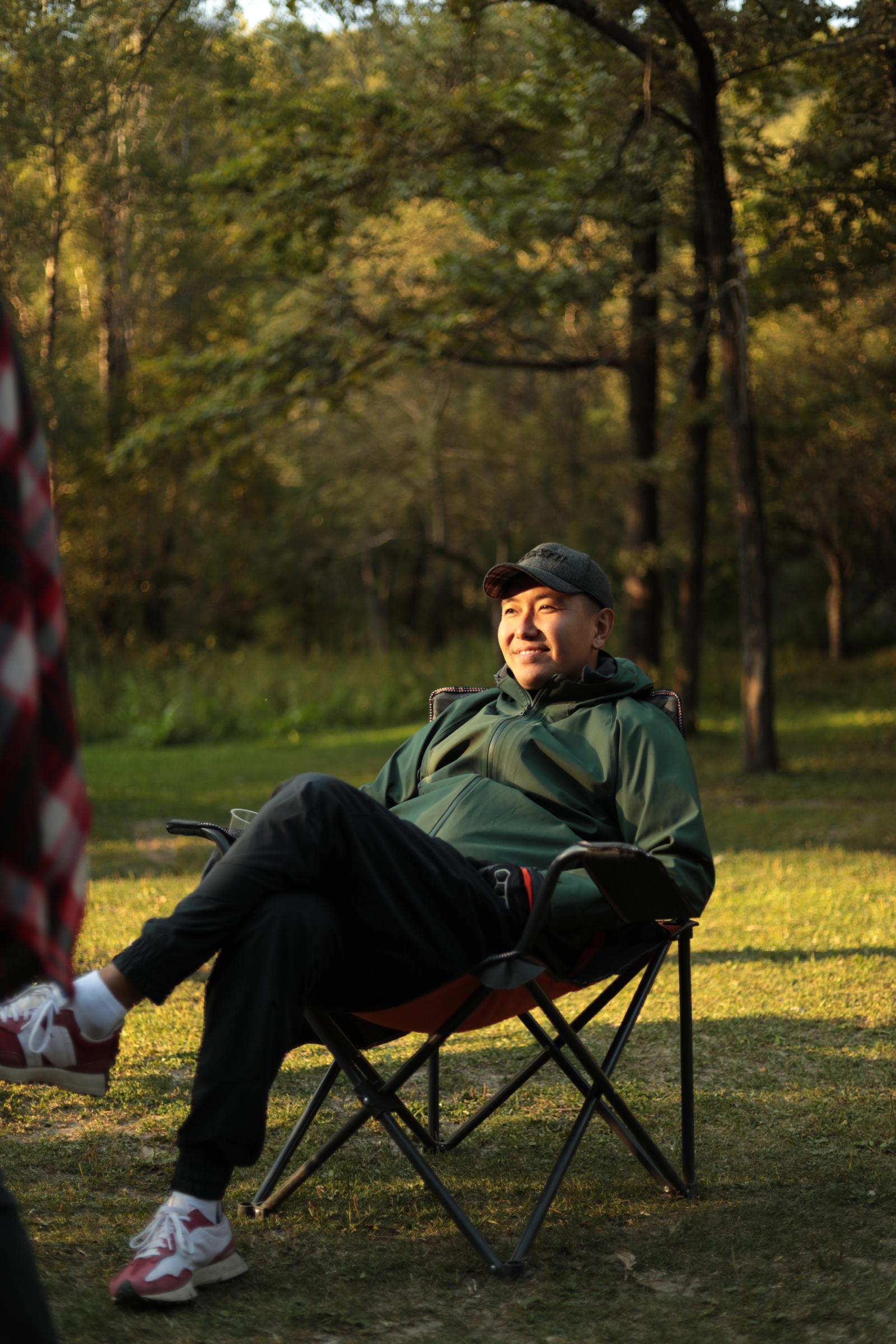
You can have the most expensive camera in the world, but without an idea, an understanding of the story and a good crew, it will not solve anything.
What is Kazakhstani cinema missing today?
I think we have a great many talented people. Good directors, cinematographers, production designers, actors and technicians.
But our production process still needs a more systematic approach.
Above all, proper preparation. Time to work on the script, scout locations, develop the visual concept and plan the technical side.
Sometimes we try to solve problems on set that should have been resolved long before filming began.
I also work to develop access to professional film equipment through ALASH RENT. It matters to me that our filmmakers have access to quality equipment and professional technical solutions.
But I always say that equipment alone does not make good cinema.
You can have the most expensive camera in the world, but without an idea, an understanding of the story and a good crew, it will not solve anything.
I would like our industry to develop not only technically, but also in its production culture.

What gives you hope — and what would you like to see more of?
The new generation of filmmakers gives me the most joy.
Young directors and cinematographers now have far more opportunities to study cinema, watch work from around the world, experiment and find a language of their own.
I like seeing more and more people who want to create something of their own, rather than simply repeat existing approaches.
We have such a rich culture, history and natural world, such interesting characters and faces. All of that can become the foundation of truly powerful, distinctive cinema.
I would like to see more bold, personal projects, more international collaboration, and more attention to images as a storytelling language in their own right.
But it is essential that we do not lose our own identity.
Because I think what interests the world is not how well we can imitate other people’s cinema, but the stories we can tell in our own language.